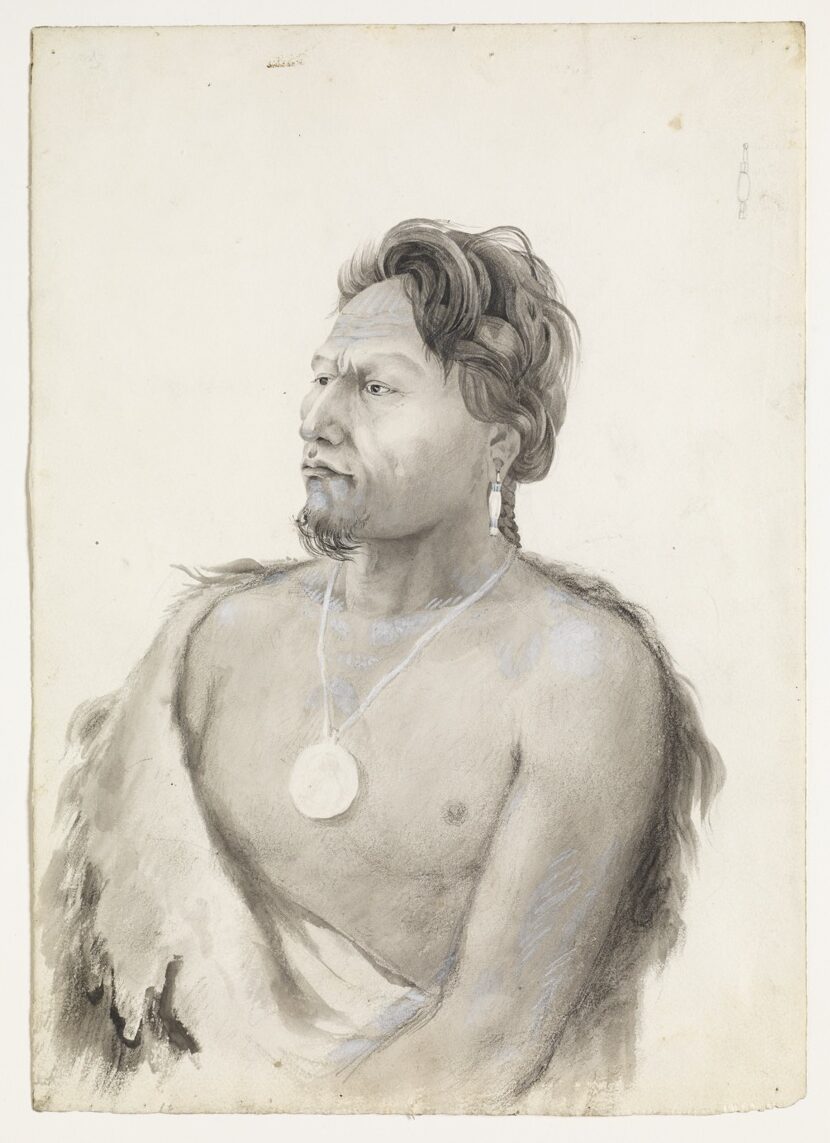
Schudegácheh, Ponca Chief
Download
jpeg(106.98 kb)
For information on accessing a high resolution version of this image suitable for print reproduction please visit the Rights and Reproduction page.
Artist
Karl BodmerBirth and death dates
1809 - 1893Artist Nationality
SwissTitle
Schudegácheh, Ponca ChiefDate
May 11, 1834Dimensions
11 7/8 × 8 1/2 in. (30.2 × 21.6 cm)Medium
Graphite, charcoal, ink and watercolor on paperInstitution
Joslyn Art MuseumCredit Line
Gift of the Enron Art FoundationAccession Number
1986.49.241Rights (i.e. copyright information)
Joslyn Art MuseumPhotographer credit
Photograph © Bruce M. White, 2019Commentary
On May 11, while the Yellow Stone was stopped near White Bear Bluffs, three Ponca Indians from a nearby village were taken on board. One of them was Schudegácheh ("He Who Smokes"), an imposing man referred to by Maximilian as the chief of the Ponca tribe. Like many of the Indians portrayed by Bodmer, Schudegácheh wears a silver peace medal around his neck. Such highly prized medallions played an important role in frontier Indian policy, since they were given as symbols of friendship and allegiance, first by the French and the British and later by agents of the American government. The American medals were generally made in three sizes. A directive issued in 1829 specified that the largest medals were to be given only to principal village chiefs, the smaller ones to less distinguished individuals. The medal depicted here bears the image of President Madison; its large size confirms Maximilian's estimate of the Ponca chief's importance. Schudegácheh's portrait was included in Tableau 7 of the aquatint atlas.
References in Journal
May 11, 1833Labels:
genre, portraitApproximate Depicted Location:
Near White Bear Bluffs, South Dakota