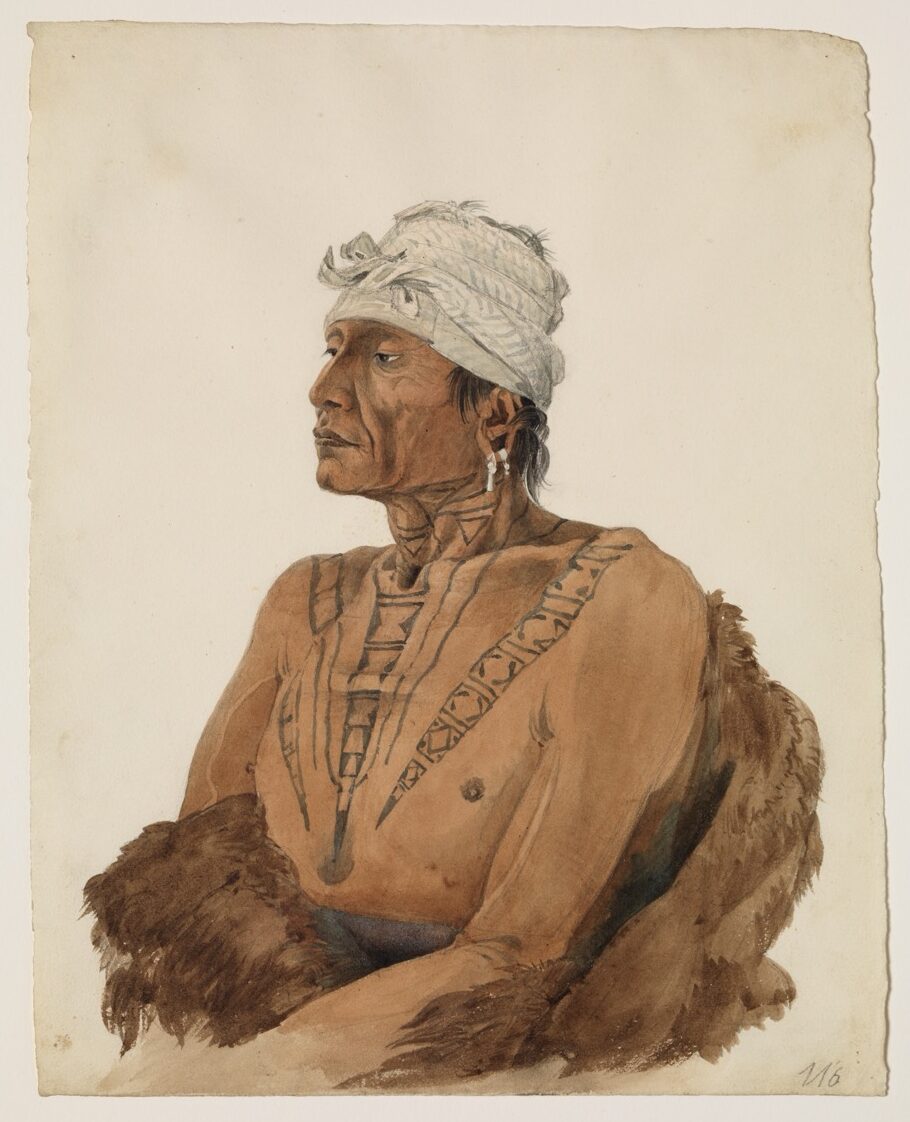
Tukán-Hätón, Yankton Sioux Chief
Download
jpeg(117.87 kb)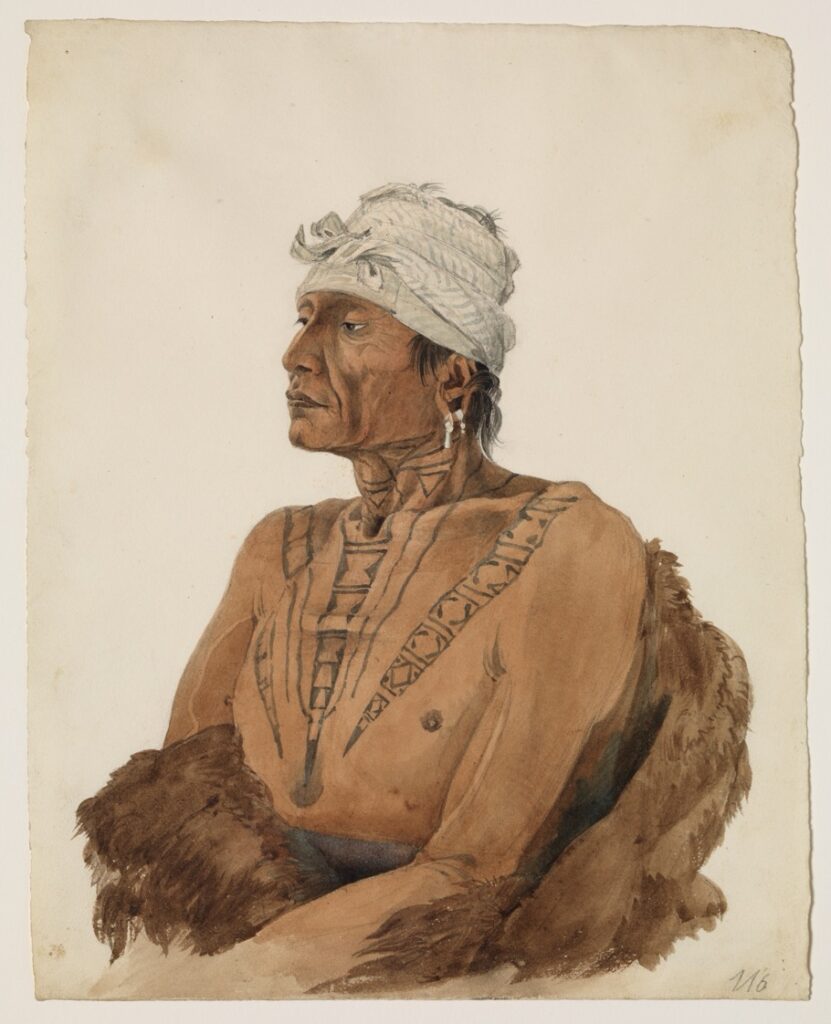
For information on accessing a high resolution version of this image suitable for print reproduction please visit the Rights and Reproduction page.
Artist
Karl BodmerBirth and death dates
1809 - 1893Artist Nationality
SwissTitle
Tukán-Hätón, Yankton Sioux ChiefDate
May 27, 1833Dimensions
10 15/16 × 8 3/4 in. (27.8 × 22.2 cm)Medium
Watercolor and graphite on paperInstitution
Joslyn Art MuseumCredit Line
Gift of the Enron Art FoundationAccession Number
1986.49.259Rights (i.e. copyright information)
Joslyn Art MuseumPhotographer credit
Photograph © Bruce M. White, 2019Commentary
Tukán-Hätón ("Horned Rock"), called Little Soldier by the Americans, boarded the Yellow Stone with his family at the Sioux agency on May 27, 1833, intending to travel upriver to Fort Pierre. The family was in mourning, as some of their children had recently died. Tukán-Hätón's head is bound in what appears to be patterned cloth and his hair looks clipped, perhaps shorn off as an expression of sorrow. Probably for the same reason he wears little in the way of ornament other than metal drop earrings. There is no mention in the diaries of this man's elaborate body paint, which could be related to mourning or to his position as a respected chief. A woodcut of this portrait was used by Maximilian in Travels in the Interior of North America as an illustration of typical Sioux physiognomy.
References in Journal
May 27, 1833Labels:
genre, portraitApproximate Depicted Location:
Sioux Agency, South Dakota