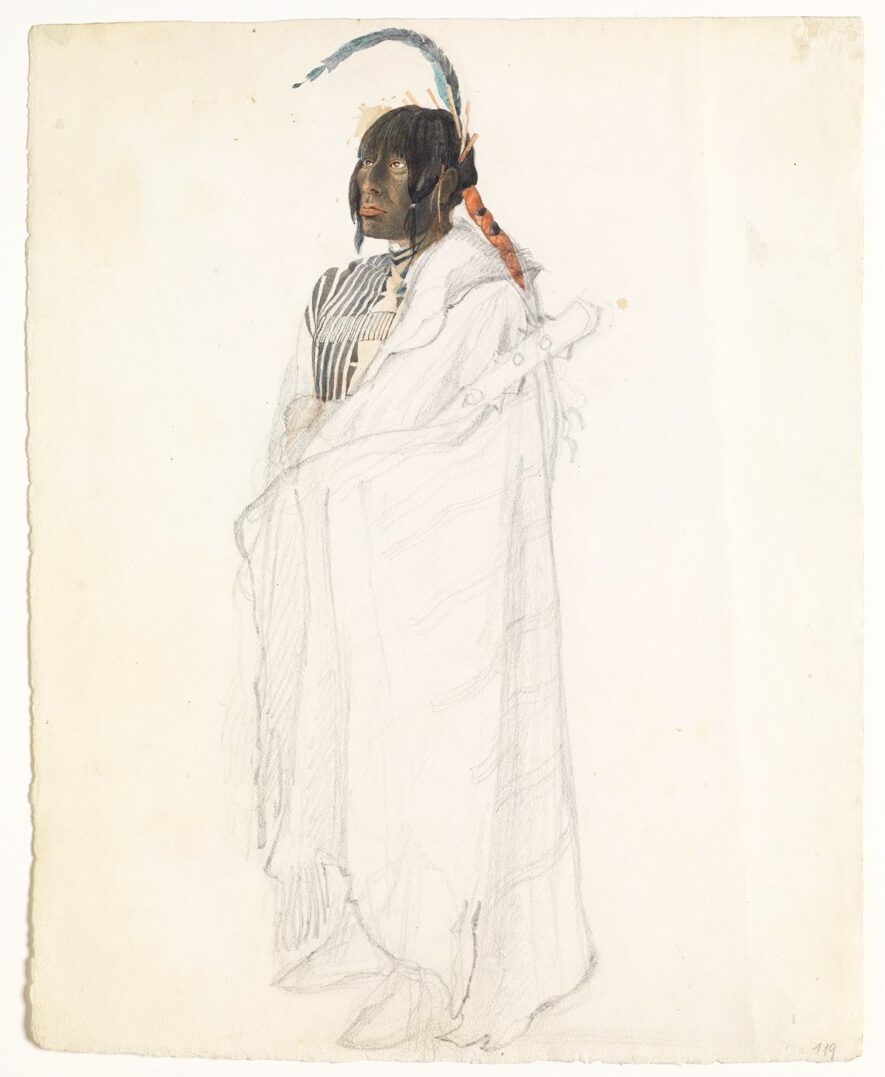
Máhchsi-Níhka, Mandan Man
Download
jpeg(70.93 kb)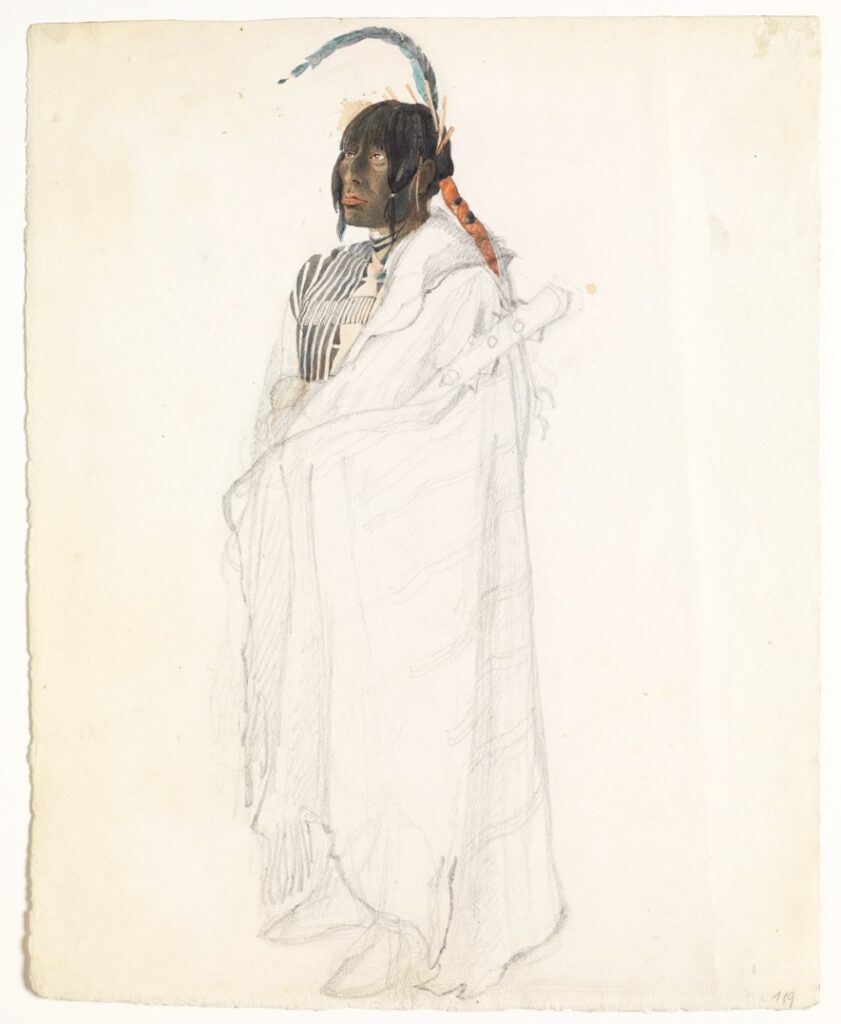
For information on accessing a high resolution version of this image suitable for print reproduction please visit the Rights and Reproduction page.
Artist
Karl BodmerBirth and death dates
1809 - 1893Artist Nationality
SwissTitle
Máhchsi-Níhka, Mandan ManDate
February 9, 1834Dimensions
12 9/16 × 10 1/16 in. (31.9 × 25.6 cm)Medium
Watercolor and graphite on paperInstitution
Joslyn Art MuseumCredit Line
Gift of the Enron Art FoundationAccession Number
1986.49.262Rights (i.e. copyright information)
Joslyn Art MuseumPhotographer credit
Photograph © Bruce M. White, 2019Commentary
There were several deaf-mute Mandans, among them two brothers named Máhchsi-Níhka ("Young War Eagle") and Mahnu-Ningka ("Turkey Cock's Egg"). The brothers were strong, good-natured men who conversed readily in sign language. Industrious hunters, they were one of Maximilian's few sources of meat during the cold, hungry winter at Fort Clark. In early February a group of Assiniboins stole some Hidatsa horses, and there was an immediate retaliatory raid in which Máhchsi-Níhka participated. Afterward he posed proudly for Bodmer, his face blackened to commemorate the fight, his hair ornamented with a cock feather and wooden sticks representing the number of times he had been struck or grazed by weapons. He is clad in a robe, dressed plainly as a warrior for battle. When someone snidely remarked that all the other Indians were pictured in their best clothes, Máhchsi-Níhka became very upset. To pacify him, Bodmer tore up the drawing and threw it in the fire-but not before secretly making a quick copy. His image was later incorporated in the crowd of figures in Tableau 27, a view of a Hidatsa scalp dance.
References in Journal
February 9, 1834Labels:
genre, portraitApproximate Depicted Location:
Fort Clark, North Dakota