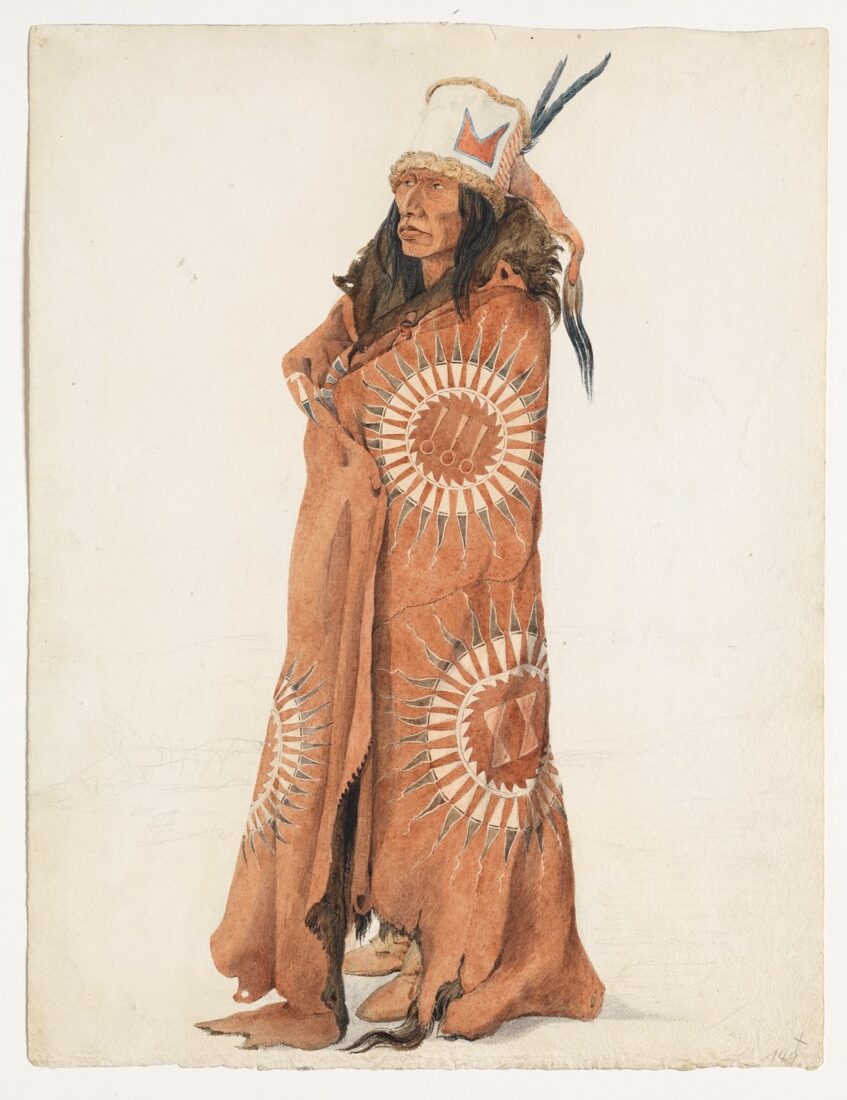
Biróhkä, Hidatsa Man
Download
jpeg(115.98 kb)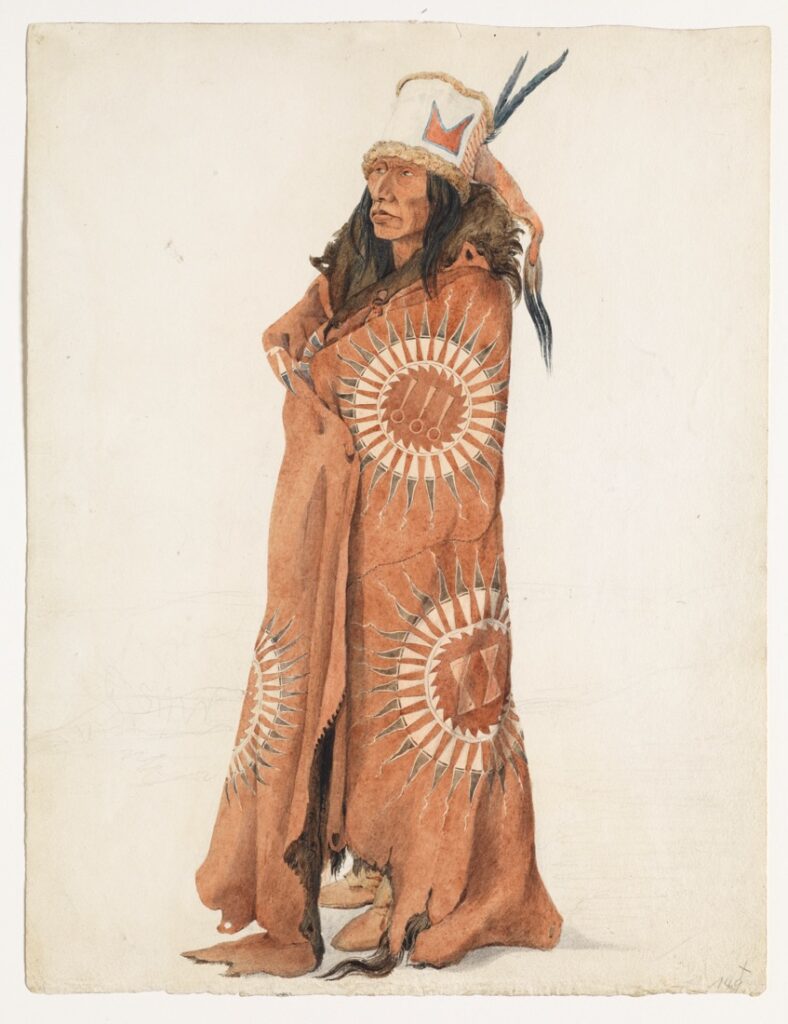
For information on accessing a high resolution version of this image suitable for print reproduction please visit the Rights and Reproduction page.
Artist
Karl BodmerBirth and death dates
1809 - 1893Artist Nationality
SwissTitle
Biróhkä, Hidatsa ManDate
March 1, 1834Dimensions
12 5/8 × 9 11/16 in. (32.1 × 24.6 cm)Medium
Watercolor and graphite on paperInstitution
Joslyn Art MuseumCredit Line
Gift of the Enron Art FoundationAccession Number
1986.49.291Rights (i.e. copyright information)
Joslyn Art MuseumPhotographer credit
Photograph © Bruce M. White, 2019Commentary
Two different translations are given for the name Biróhkä. In the diaries it is stated to mean "The Robe With the Beautiful Hair," while an inscription on the reverse of the painting refers in French to "He Who Veers From the Side." The Mandans also had a nickname for this man: Pahchub-Hashka, "Big Nose." The painted cap Biróhkä wears is made of the hide of the highly prized white buffalo. It indicates that he was a man of substance, as does his beautifully painted robe. The feathered circle pattern was a popular one in the nineteenth century, favored especially by the Sioux and neighboring tribes. Maximilian described the design as a sunlike image, but noted that to the Indians it represented the feathered bonnet of the accomplished warrior. Feathered circle robes are still commonly referred to as "men's robes," a term obviously stemming from the old association with battle honors. Clad in this robe Biróhkä appears as one of the spectators at the scalp dance depicted in Tableau 27 of the aquatint atlas.
References in Journal
March 1, 1834Labels:
genre, portraitApproximate Depicted Location:
Fort Clark, North Dakota