Adornment & Identity
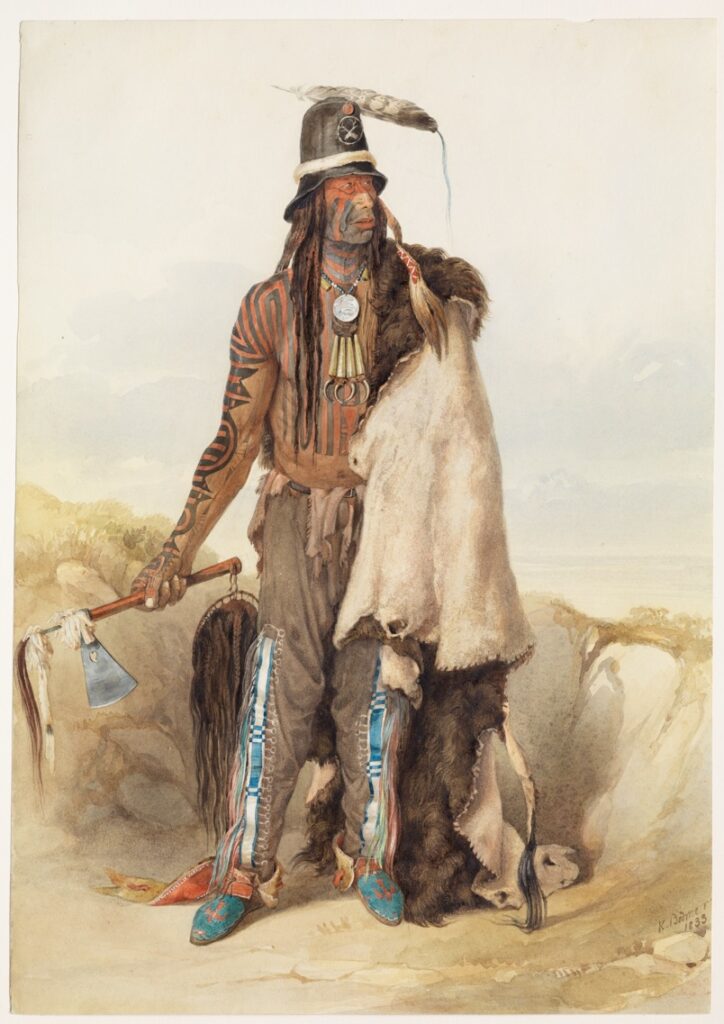
How American Indians dressed was specific to their own tribe or clan and varied by cultural practice. Appearance and adornment served greater purposes rooted in identity, oral tradition, and community. Karl Bodmer’s body of work during his travels with German Prince Maximilian (1833-1834) is recognized for its uniquely accurate representations of American Indian regalia given the cultural landscape of North America in the 19th century and the vast differences between European and American Indian cultures. In Bodmer’s work, educators can see how each tribe or clan had distinguishing dress aligned with their cultural practices. Educators can also see how, as participants in global economics, trade, and social practices, American Indians adapted their appearance to represent European cultural influences while staying true to their community practices. In this lesson, students will consider how appearance represents larger understandings of identity and while reflecting one’s experiences with others and the world around them.