Journey from Cantonment Leavenworth to the Grand Bend and the Little Missouri
Dangerous place – Wåssóbä-Wakándagä – Independence Creek – Blacksnake Hills with trading house – Nodaway River – Wolf River – Grand Nemaha River – Land of the Half-breeds – Nishnabotna River – Little Nemaha River – Violent storm – Weeping Water Creek – Platte River – Bellevue – Omaha Indians – Their dance – Council Bluff – Boyer Creek – Little Sioux River – Blackbird Hill – Floyd’s Grave and River – Big Sioux River – Iowa River – Vermillion River – Jacques River – The Ponca Indians – Meeting with the steamboat Assiniboine – Striking hills – Cedar Island – Long halt because of lack of water – First view of bison and antelope – Long stay near the Bijou Hills – Cedar Fort – Sioux Agency – The Dacota (Sioux) Indians – Big Bend – Medicine River – Teton River – Fort
April 25, 1833
Early in the morning, foggy; afterward, slightly overcast sky, and at nine o’clock, strong wind. Yesterday Bodmer had brought back from the prairie near the trading house a pretty, orange-colored flower (Batschia canescens) that commonly grew there; we had not seen it [before]. In the region of the trading house, settlers are said to have settled as far as miles inland. From the house it is only 8 miles to the sources of the Little Platte River; and between the two rivers, a little village of the Iowas, who had just committed the murder of the Omahas, is situated on the high ground. Beautiful hills with rather sparse forest were on our left early this morning; [the forest] floor [was] completely covered with sprouting plants of a vivid green color (mayapples especially).
After breakfast we reached an ugly place full of snags along the right bank. To the right, [we] faced large sandbars. Big, broad accumulations of soil, washed up and deposited by the river, fill the bends of its course; they are overgrown with grasses and other plants. A cross section along the water shows a layer of 3–4–5 feet of this completely black soil on top. About nine o’clock, a strong, unpleasant wind arose. A wild turkey walked near a willow thicket on the left bank but did not remain there. To the right in the bank is the outlet of the channel behind Nodaway Island, called Nodaway Slew, which separates the island from the mainland; about 1 1/2 miles from here, the Nodaway River empties into it. The island is large and beautifully wooded. Before we reached it, we saw on the hill to the right the most beautiful trees in bloom, especially redbud and white Crataegus or Pyrus (without thorns). The banks of the Nodaway Slew are covered with tall timber [and are] now most especially picturesque [with] fresh vegetation. Near that slew the Missouri turns left and runs S 2 W to the other side toward the hill chain. To the left on shore, a bald eagle nest. This splendid bird is soaring about. Soon an accumulation of sand from the river along the steep banks, [which are] covered with young cottonwoods. Here from the bank someone shot at a coot in the river. Farther on, several sandbars; we were jolted several times by snags. Somewhat farther still, a place where we could not find any channel at all.
Here we put in off the right bank and send out the woodcutters; the Frenchman Robidoux, who recently has been behaving badly on the ship, has already had some wood cut here. We left these people on Nodaway Island. Since we could not press through in this channel, [at] about a quarter to twelve o’clock, we turned around, back again to where we had come from, until we were below the sandbar that separated us from the Missouri channel on the left, also full of snags. After our boat took soundings in this channel and returned, we steered into it.
72°F [22.2°C] at twelve o’clock noon. We immediately found in the channel a very treacherous place full of snags. We passed this first one, but in the second one we ran into a snag. To get away, we let the ship drift toward the bank, where we collided, especially, against driftwood lying there. After our meal we passed the third very perilous spot and had somewhat more passable water. Along this entire bank, there were green underbrush and rushes in the forest; above it, tall timber, most of it apparently dead. Dougherty believed some of it had died out because of flooding and storms. To the right in the river, we were now opposite the place where we turned around this morning. Captain Smith Martin wintered on Nodaway Island with twenty men for two whole years. They lived from hunting. One year they killed 1,800 deer (Cervus virginianus) the second year 1,600, and shot and wounded just as many that they did not get. In addition, they shot elk and bear. Elk are now rare in the area. On the left bank, the young cottonwoods (40-foot-high trees) were wildly shattered and their branches wildly intertwined and entangled. Few snags in the river now. Soon a pretty wooded island with eroded, steplike banks; it remained to our left, and we moved over toward the right bank. Right away numerous snags again, and again more jolts.
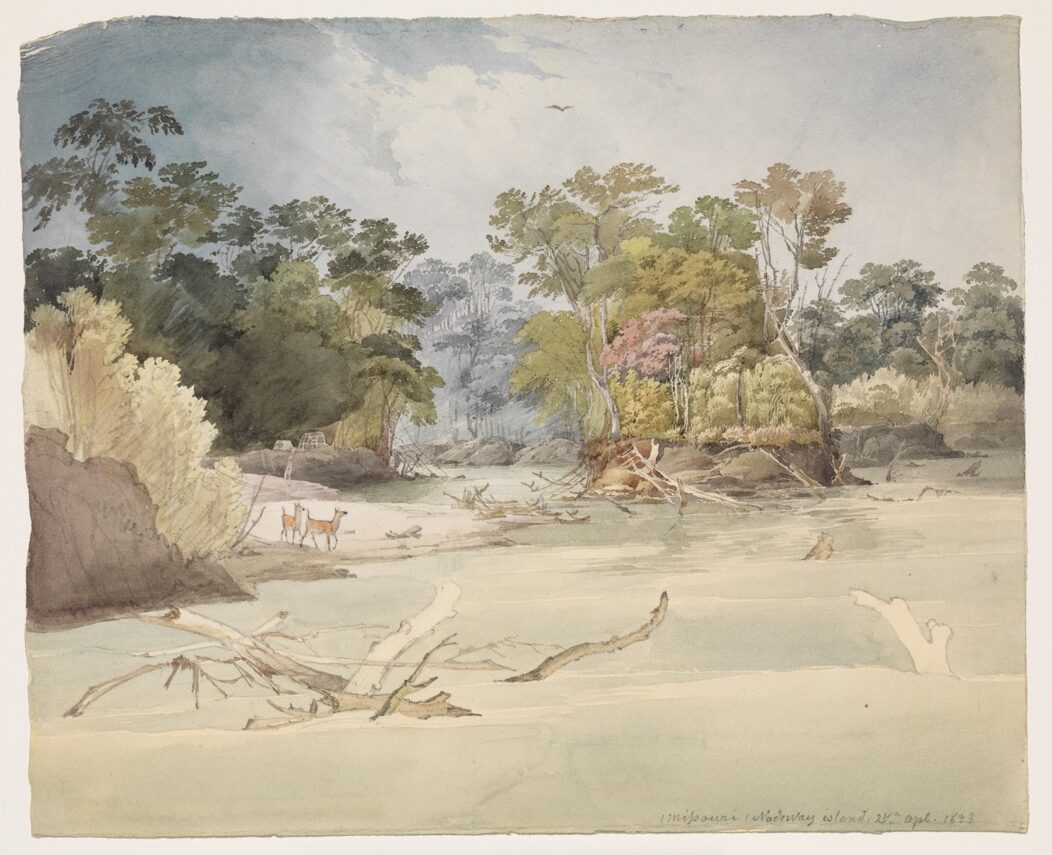
We put in at Nodaway Island and loaded the wood prepared by the cutters. Here we remained for half an hour. At the end of the island, the upper Nodaway Slew opens, above which we put in (250 paces beyond the outlet) to load more wood. On the northern bank of the channel, five to six Indian lodge frames stood in the sand, and in the forest, still another one or two, which probably were made by the Sauks or Iowas and were once covered with bark. These lodges stood in beautiful, magnificent wild forest.
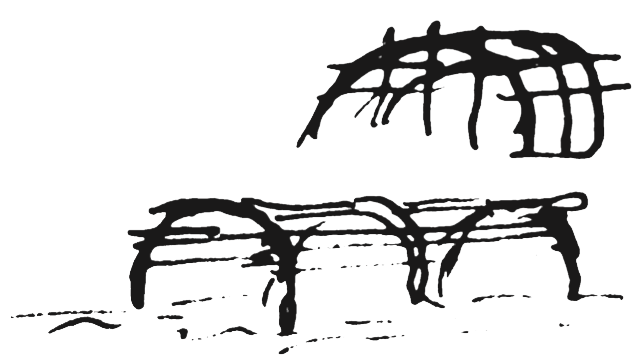 Here it began to rain, and a dark thunderstorm was coming up. A lost poodle swam after the ship, and it was brought in with the boat. Right where the ship lay we saw the tracks of an otter in the sand. The redbuds were blooming very nicely in the beautiful forest above the tall sandy bank. Mr. Bodmer sketched the upper slew of the island but from this vantage point could not see the Indian wigwams. Departure after twenty minutes. The hill to the right was covered with sparse forest; Podophyllum with its big, bright green leaves covered the ground. Many horse chestnuts (Aesculus) grew here; their big, beautiful green leaves were out. The redbuds and Crataegus (azarolus ?) or Pyrus mingled their red and white blossoms. Huge fallen trunks in the water. Magnificent view of the forests, which have become almost entirely green in the two days following the rain; splendid springtime mingling of colors. Ducks in pairs everywhere. In a dark forested valley on the right bank, I saw a large, long Indian lodge, which was as long as the valley was wide; it seemed to have been built for many persons. Its location was wild and beautiful; Podophyllum everywhere extended its large, beautiful, shiny light-green leaves; the fruit, which occurs plentifully here, is eaten in large amounts by the Indians.
Somewhat farther away, between two tall cottonwoods on this rugged bank, stood a tall, dead trunk without branches from which a wild goose (Anser canadensis) flew; it had its nest [there]. Not far away the nest of a bald eagle rested on a tall tree on the bank. A dark thunderstorm and clouds were coming up. Thunder and lightning could be heard, though [only] moderately. To the right in the forest, there was a fire. Smoke was rising in several places, and along the ground, the forest was scorched black in spots for a great distance. Indians or river travelers had done this. If the Indians want to make their tracks unrecognizable or conceal them, they light the grass and shrubs behind them.
To the right and left, sandbars now; we hurry to the left bank. Many ducks fly up in all directions, most of them in pairs, all of them wood ducks. A pair of wood ducks emerged from a hollow in the steep bank to the left. Here, too, are remnants of Indian lodges, probably of the Sauks, who have canoes. At several places in the forest, the understory was completely red from redbuds; farther away, completely uninterrupted. We again reached the hill chain that was very steep.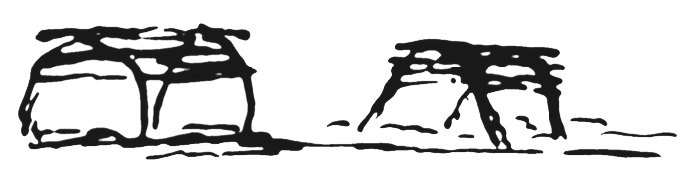 In the narrow strip of forest between the hill and the river were eight Indian lodge frames. Very many Aesculus grow here in the forest; they are said are said to have yellowish blossoms [but are] not yet in bloom. Farther on, an island. The river in both channels [is] very shallow; we run aground [and] then [do so again] in the left channel farther upstream. Here to the left along the bank, scenic hills with rounded-off domes but strikingly descending edges; everything covered with sparse forest, mosses, and plants. Before twilight we find ourselves before the outlet of the Wolf River, which empties picturesquely from dark forests. Near its outlet, an eagle’s nest.