Four-and-a-Half Months’ Stay in New Harmony
Description of the region – Natural history – Messrs. Say, Lesueur, and Owen – Hunting excursions in Indiana and Illinois – Wabash, Fox River – Illinois prairies – Albion – Black River – Mr. Bodmer’s trip to New Orleans
November 27, 1832
Very beautiful morning, clear sky. Hoarfrost without frost. At seven thirty, 2°R [36.5°F, 2.5°C]. Today I had some assistance preparing the animals because Dreidoppel feels too weak. Mr. Lesueur took one animal and yesterday gave me a live turtle, a variety of Emys geographica here from the Wabash. During the summer, this species is quite abundant in lakes and streams of the area. Dreidoppel had seen large numbers of them sitting on the wood in the water as late as the beginning of November. Mr. Say regards them as the genuine geographica from the lakes, but Lesueur considers them to be a separate species. In my [Natural History] Diary I named it Emys lesueurii. Its body is most delicately marked with fine yellow stripes.
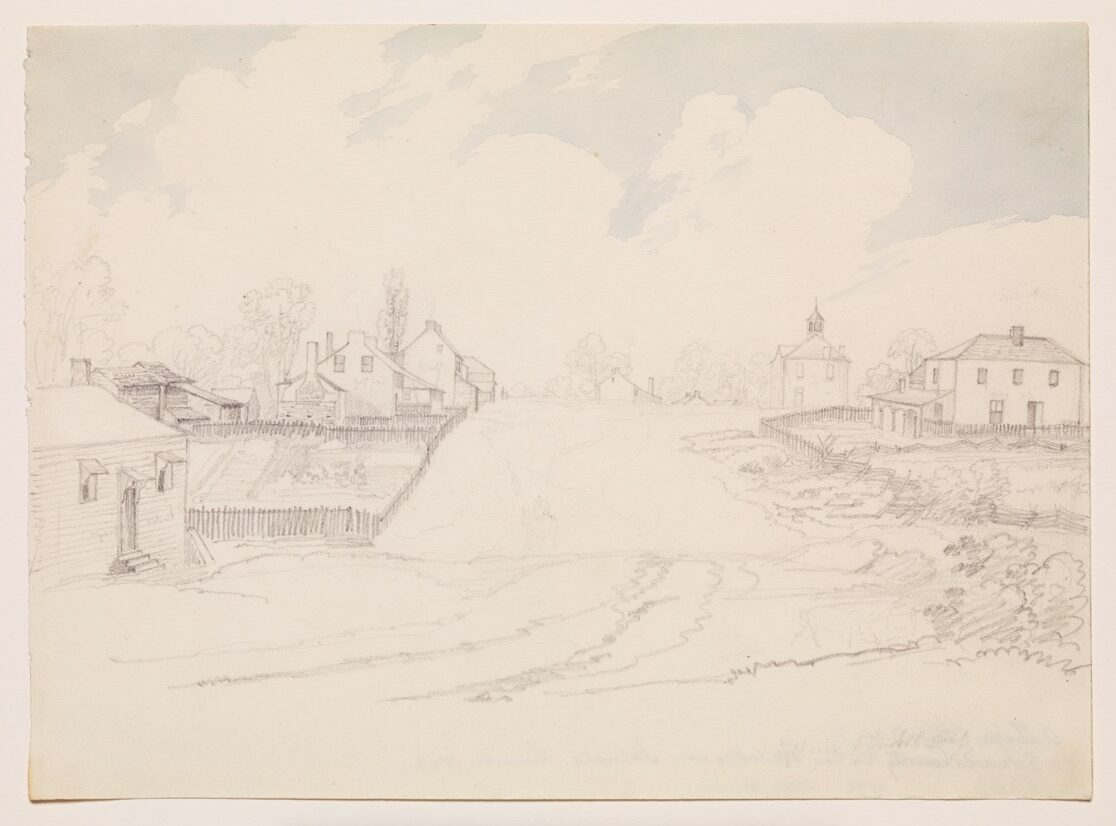
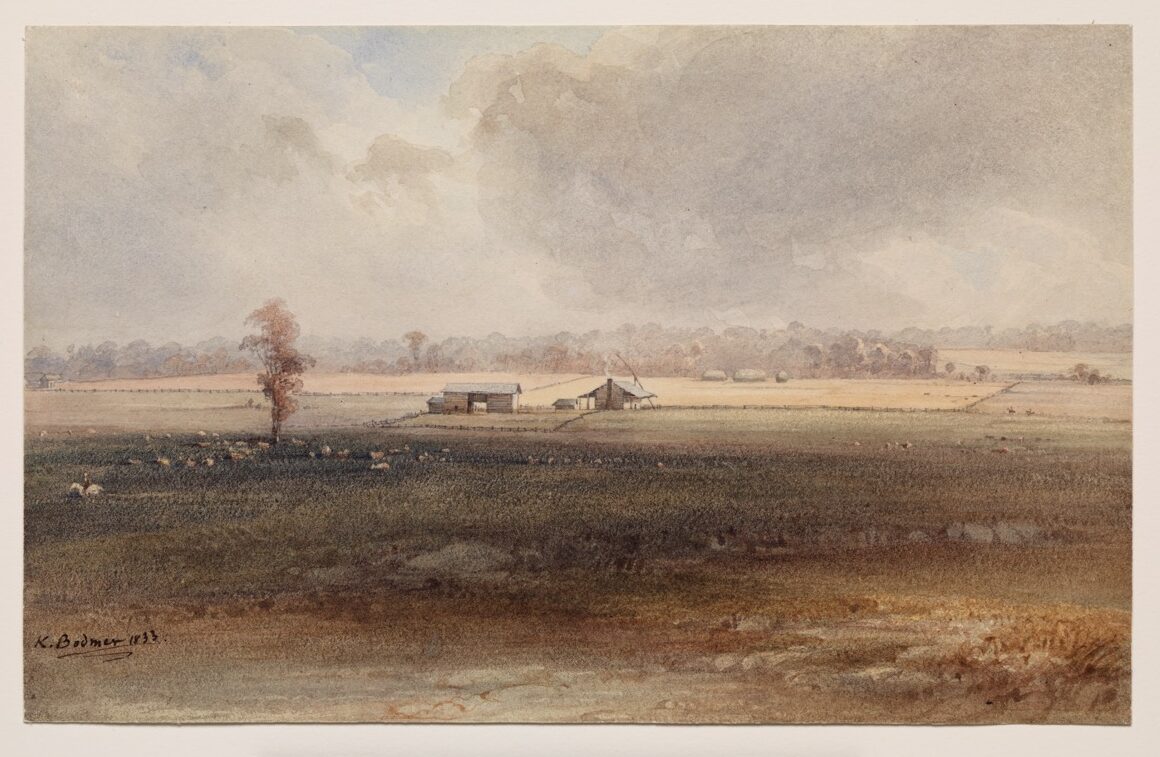
At noon, temperature of 7 3/4°R [49.4°F, 9.7°C]. At about noon Mr. Bodmer and Mr. Twigg (General) returned from Albion, a small town on the boundary of the so-called prairies in Illinois. These regions are only half open, and everywhere fringes of forest can be seen in the distance. The genuine prairies beyond the Mississippi have almost no trees at all. The travelers received a friendly welcome everywhere. People promised to send us all kinds of animals from that area. There are wolves there, red, gray, and black ones; [also] gray and red foxes. Wildcats (lynxes) are not uncommon, likewise the rat with pouches in its cheeks (gopher), whose trails can be seen everywhere. White-tailed deer (Cervus virginianus) are numerous. They found a deer that had been shot and then perished in a prairie fire. They saw the wide circle of fire when the prairie was burning. Also, there are various bird species not found in the forests: during the migratory season, for example, the great white crane (whooping crane), Grus americana, a splendid bird. Furthermore, the prairie hen (Tetrao cupido), which can be obtained in large number, however, only when there is snow, and none of which they shot. In addition, Falco furcatus, the beautiful white-and-black kite. Mr. Bodmer shot a large earless owl (Strix nebulosa) and the beautiful rust-bellied squirrel (Sciurus rufiventer), which they saw there as well, often running across the path in the forests. Mr. Bodmer had drawn some very nice sketches, including the head of a white heron. They brought back various seeds as well. On the way back, they lodged for the night in a house about 4 miles from Harmony, where they were told that during the migration season there were swans, geese, ducks, and cranes in such numbers that one could not hear gunfire because of all the clamor.
Afternoon visit with Mr. Owen. During the afternoon Dreidoppel had violent headaches with his diarrhea. In the evening there was a dance in our inn—for our sick companions, really no great delight. The music consisted of several violins and a large drum, which was beaten continually without pause and produced a pitiful, sustained racket that lasted, moreover, until midnight. We were invited to this festivity, but we preferred to rest, even though the affair was right opposite our rooms. At the outset they played a dance that we in our rooms took for “Yankee Doodle.”